(1969)
 |
 |
 |
 |
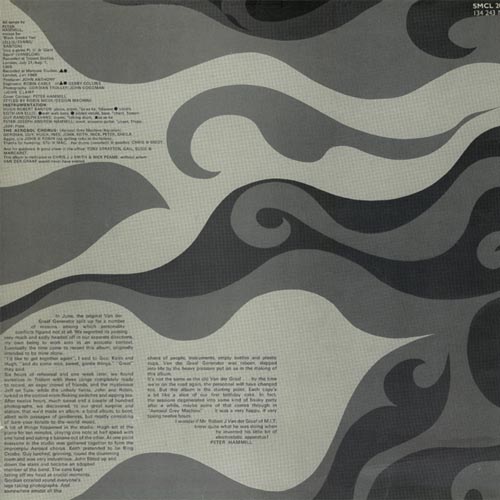
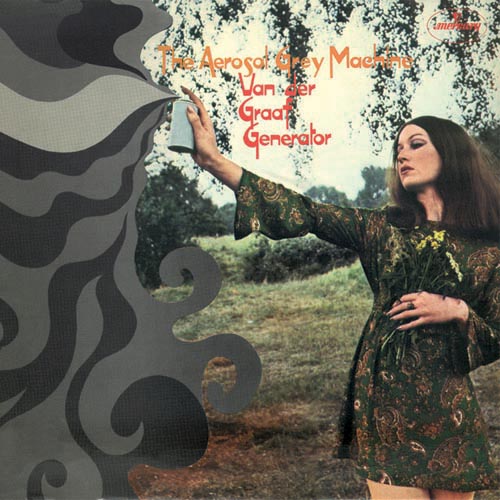
| Back Cover | (Mercury) | Front Cover | |
 |
 |
 |
 |
| Back Cover | (Fontana) | Front Cover | |
 |
 |
||
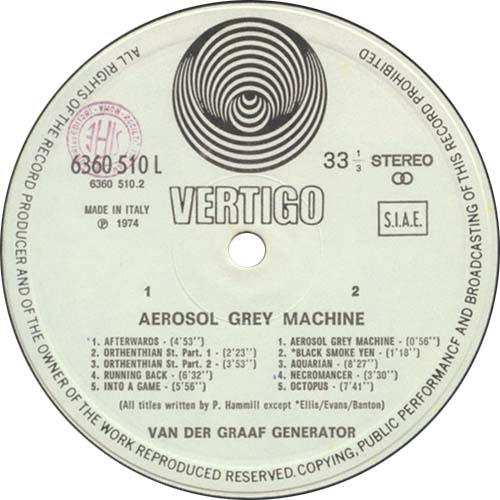
| (Vertigo - Italy) | |||
 |
 |
||
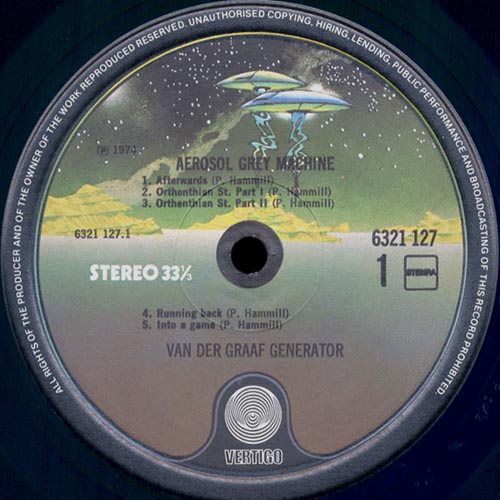
| (Vertigo - Holland) | |||
|
|
|
||||||||||||||||||||||||||||||||
| (Follow links for lyrics - use your BACK button to return here)
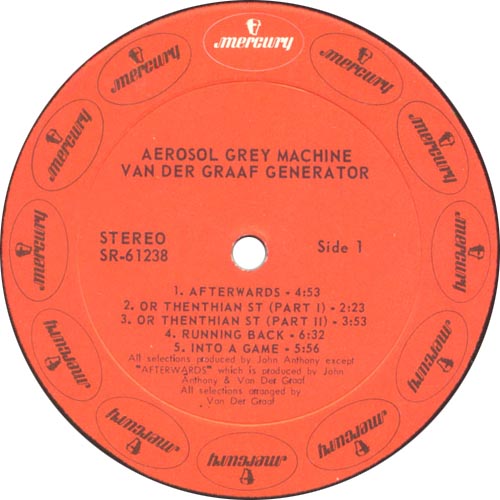
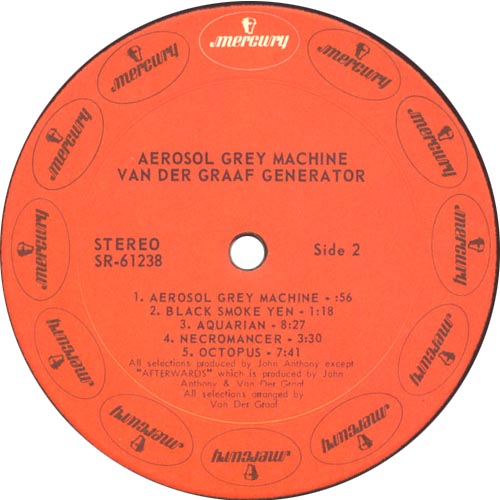
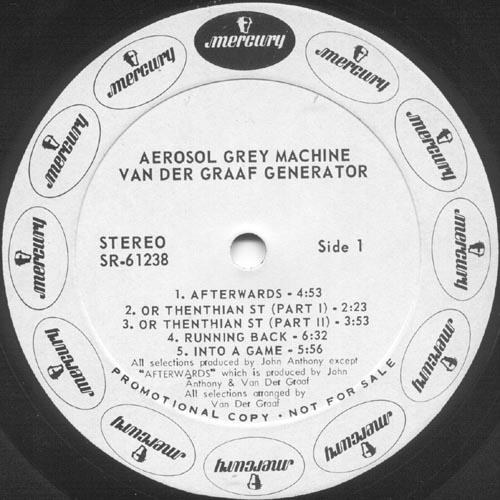
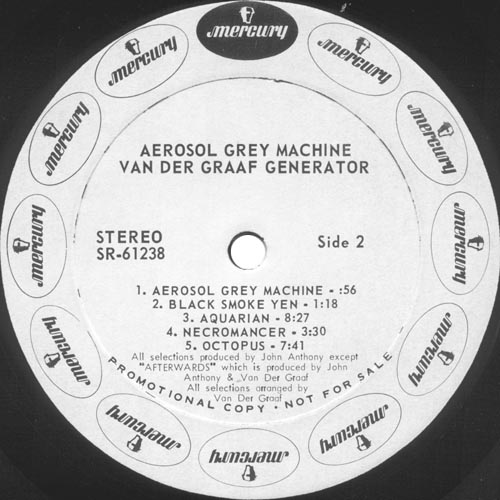
There are 4 versions of the USA Mercury release.
| ||||||||||||||||||||||||||||||||||

Mercury Re-issue (1999) |
||||||||||||||||||||||||||||||||||
|
Orthenthian Street - "The street in question does not exist, although a search for it, and the hotel we believed it to hold among its houses, took well over an hour: symptomatic, perhaps, of life in bands! This was the first song of mine which dealt - if obliquely - with that lifestyle and the endless vistas of motorways and assorted potential destructions. If it is claustrophobic and inconclusive then that only serves to further its point."
Aquarian - "This song has a chequered history of assorted titles and intentions: originally to be a celebration of the incoming Aquarian Age, it went through a phase of being a hymn to an assorted band of troubadours bound together under the aegis of a certain record company. After the sufferance of no little trial and tribulation at the hands of this concern, I had no regrets as I withdrew my lyrical support from it and re-engaged the song on its old rails. Pitfalls abound in any eulogising songs, and since this time I have been more concerned with my doubts in songs rather than with certainties which are fickle as the seasons. Octopus - "These lyrics, dealing with a similar case of disorientation and inability to over-view, were written in the snow-besieged Students' Union of Southampton University. The original Octopus took the form of a mural in the flat of the lady concerned and it is, in a way, validatory that the relationship was neither consummated nor clarified."
|
|

(German price tag) |
|
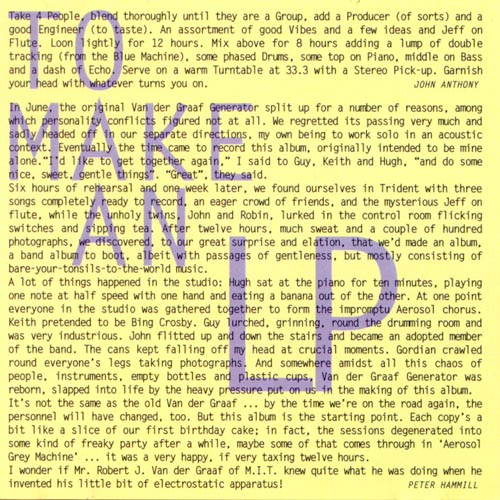
| "When I originally signed to Mercury in 1968, it was as a member of VdGG, then comprising myself and Chris Judge Smith. By late in the year, of course, the line-up was myself, Hugh, Guy and Keith Ellis and we were managed by Tony Stratton-Smith. At this point Mercury considered that they had the band signed up, but Strat insisted - rightly - that the other members should not sign up to what was a pretty dreadful deal. Mercury therefore refused to let us record. After our equipment was stolen (not for the last time) the band broke up. At this point there seemed no reason for me NOT to make a solo record to Mercury, to whom I was undoubtedly, if rashly, signed. Thus was made "Aerosol". Subsequently, we decided to reform and I was released from the Mercury contract on the condition that they could release "Aerosol" as a VdGG work".
- Peter Hammill in an interview with Mju:zik magazine, February 1998 "I had been engaged by Mercury Records. Peter Hammill had a contract with them and had a problem, as they didn't want to set the group under contract; so they gave him two days of studio to record an album. Two days! We made "The Aerosol Grey Machine". And it was in the Trident Studios because I liked Ken Scott, who had worked as a sound technician on "A Salty Dog" of Procul Harum. But Scott was working only with the biggest producers, so they gave me Robin Cable who was even better, and in fact he recorded all Elton John's albums".
| |

|

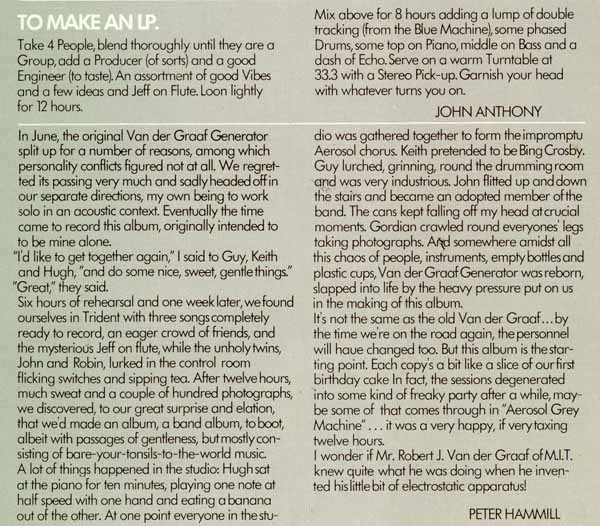
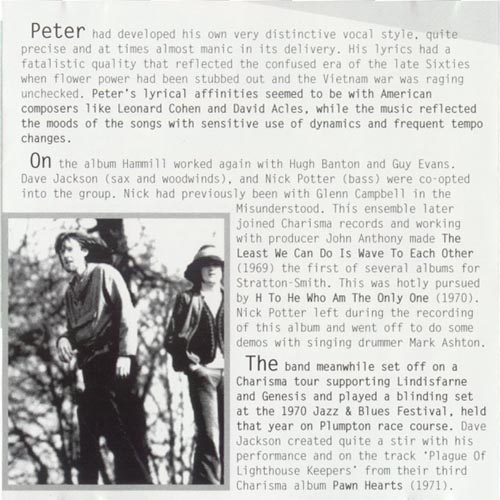
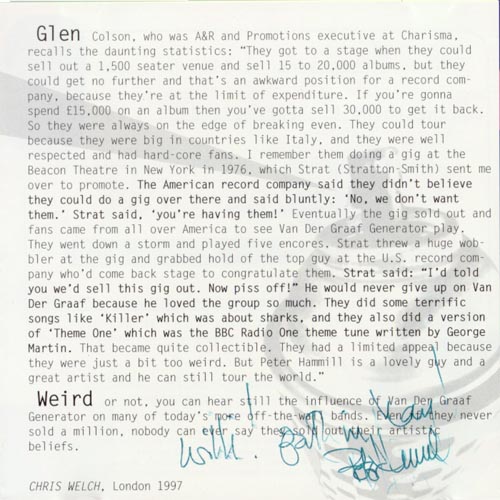
| The CD version of "The Aerosol Grey Machine" (no wonder it didn't sell in the US - they spelt Gray wrong!) is accompanied by a booklet containing some very interesting stories by Peter Hammill of the early days of the band - READ IT HERE.
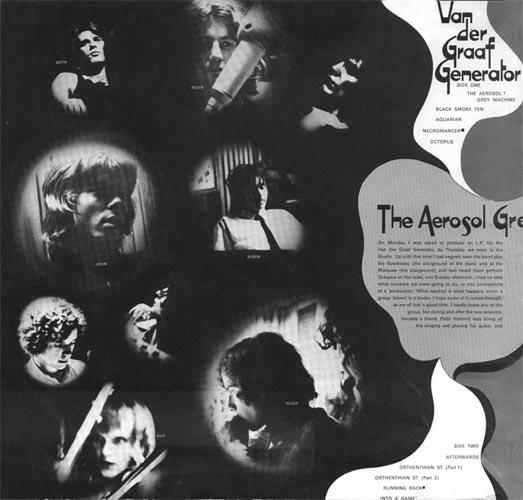
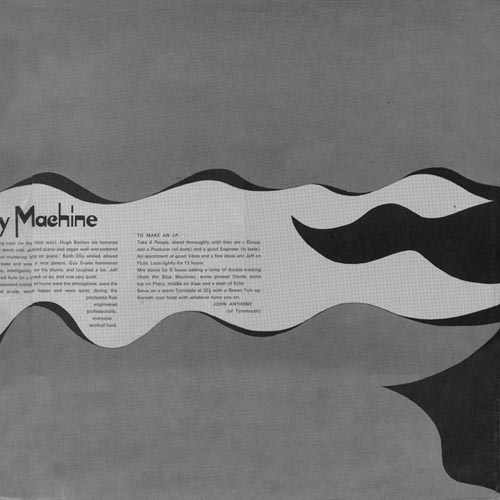
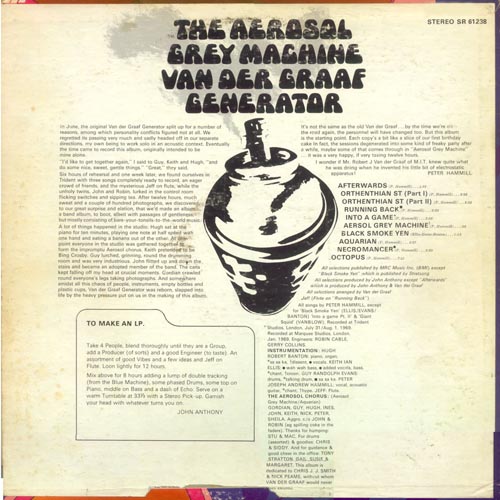
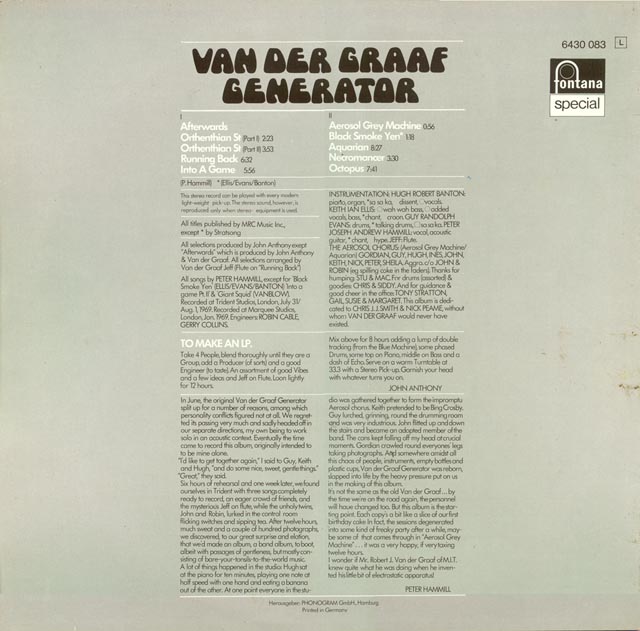
Reference is made in Peter's text to the original album sleevenotes, which are reproduced above, but reproduced so tiny on the CD as to render them quite unreadable without a magnifying glass. See also The Early Days page. | ||||||||
| Of interest also is the following sleeve note:
"The digital remastering involved in the production of this CD was restorative rather than radical in nature; for the most part levels and fades, rather than EQs, were adjusted. The most notable aspect of the remastering was the cross-fade which has finally united the two halves of "Orthenthian Street." This fulfills the original intention, which was thwarted through simple lack of time (and money) at the mixing stage..." | ||||||||
| ||||||||
| The original sleeve intended for the UK release is shown below. It never saw the light of day. This sleeve is owned by a collector who it is believed paid about £500 for it (with no LP). | ||||||||
|
||||||||
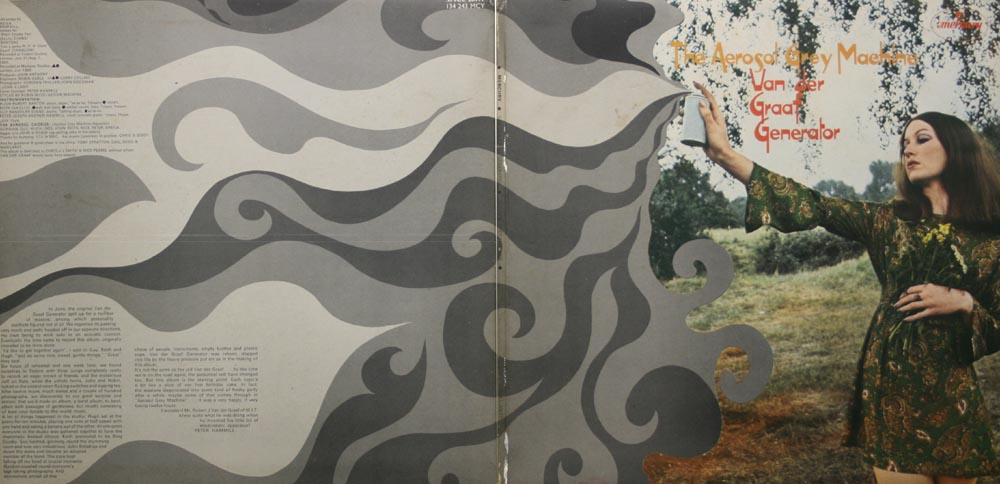 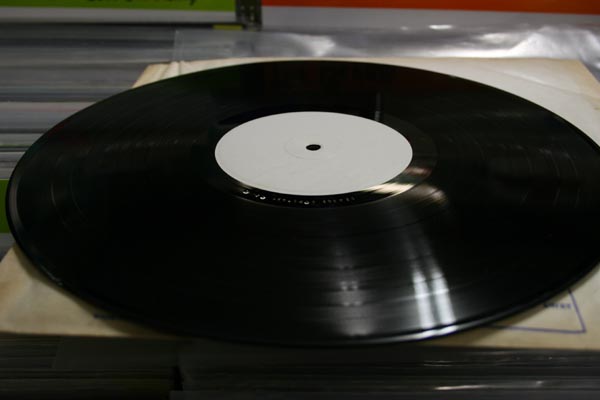
The one above surfaced in late 2007, this time with a white label LP. |
||||||||
|
John Anthony (of Tynemouth) had a bit more to say on this version:
| ||||||||
| ||||||||
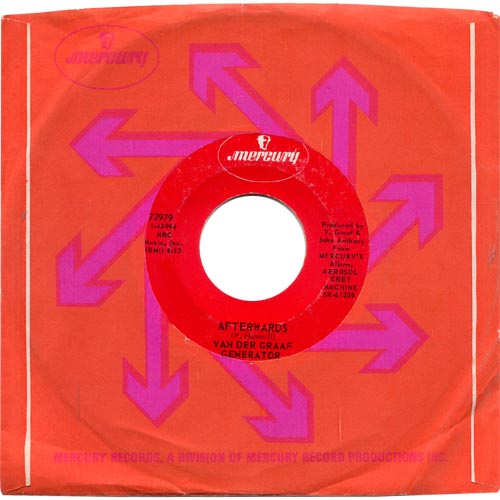 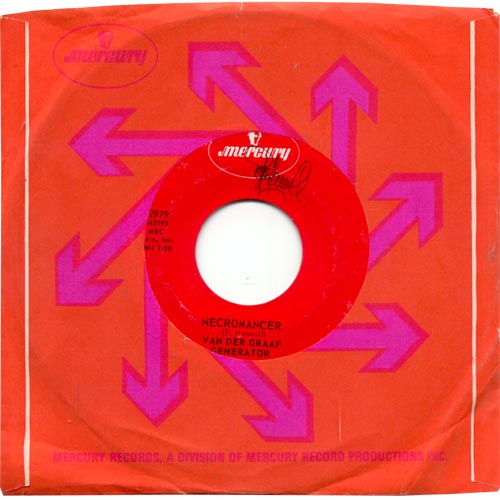
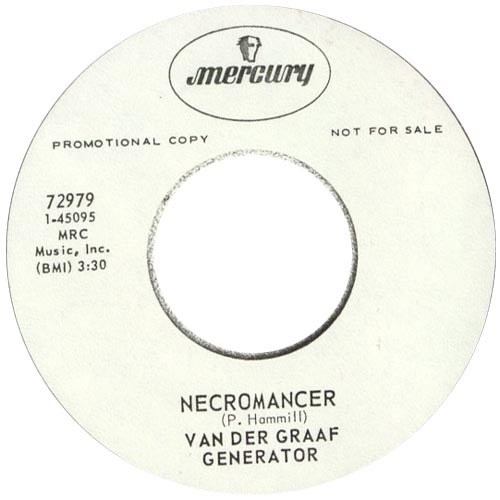
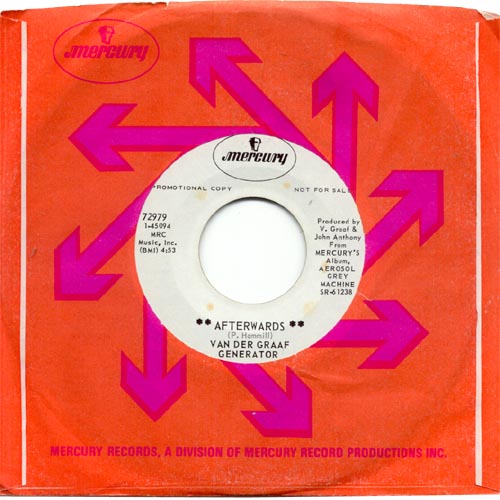
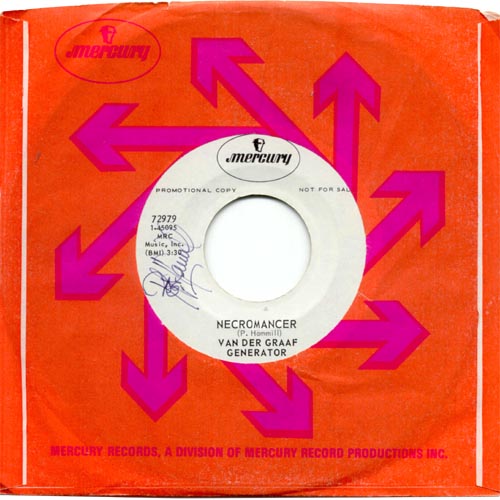
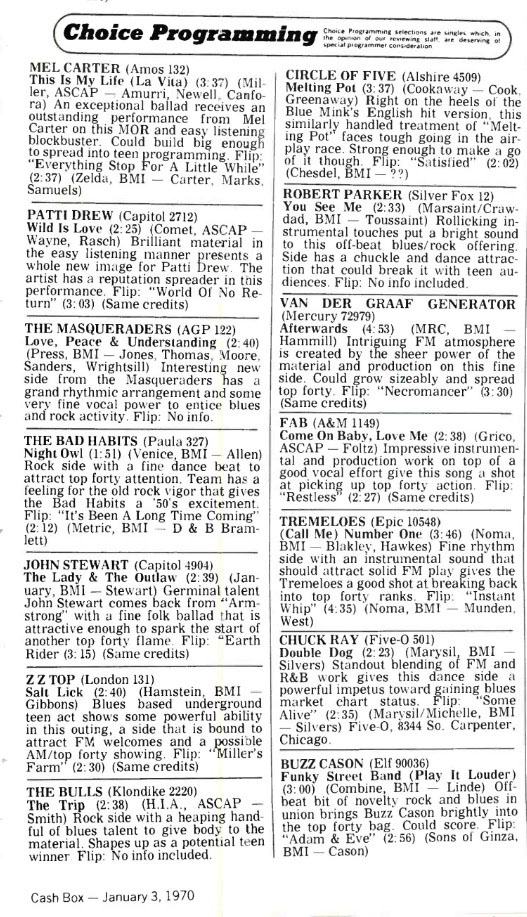
Afterwards / Necromancer Single (USA only)
|
||||||||
| ||||||||
  |
 |
 |
||||||
  |
||||||||
      | ||||||||
|
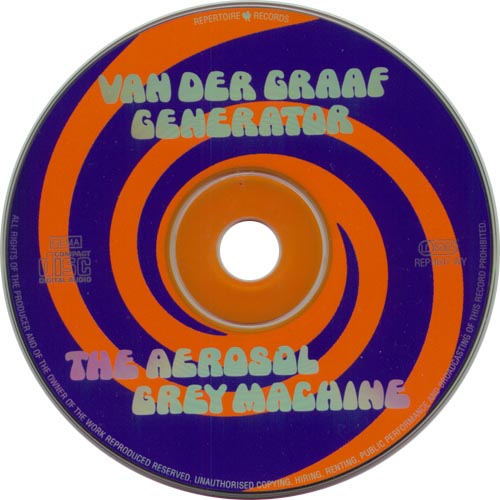
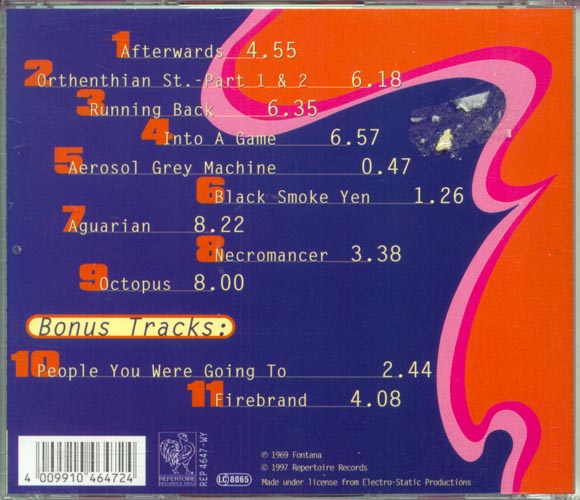
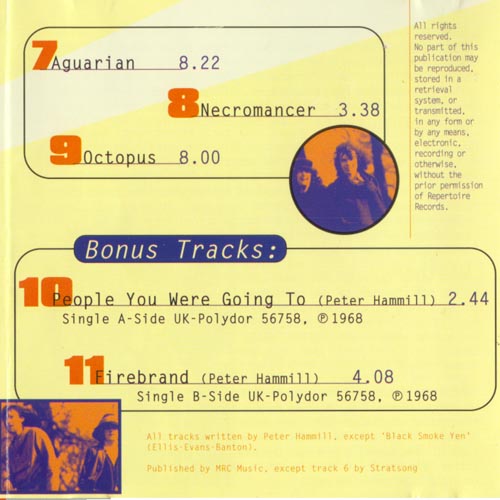
The Repertoire CD release with Firebrand and People You Were Going To as bonus tracks
"Having waited some 28 years from its original release to see a CD re-issue, we now get two versions within a few weeks of each other! Originally released in America only (on Mercury), this was later issued in Europe on Fontana, but has not been available in any version since the 70's. To make it even more of a collectors item, some early copies were issued with a largely instrumental track titled Giant Squid in place of the song Necromancer, which appeared on all later editions.
Interviewer: Some of your songs are still hard to get, like the first Van der Graaf Generator single which was only released on the German CD version of 'Aerosol Grey Machine'.
Interviewer: It's not fair towards the fans. They first buy the vinyl edition because 'Aerosol Grey Machine' didn't first exist on CD. Then two different editions with different bonus tracks are released on CD.
| ||||||||
| ||||||||
 |
 |
 |
||||||
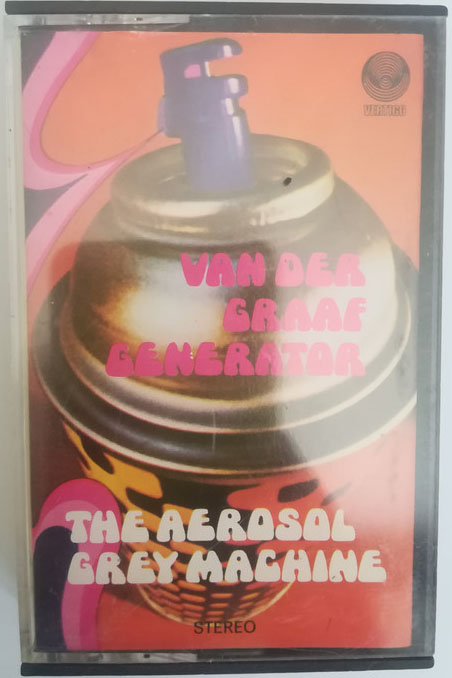
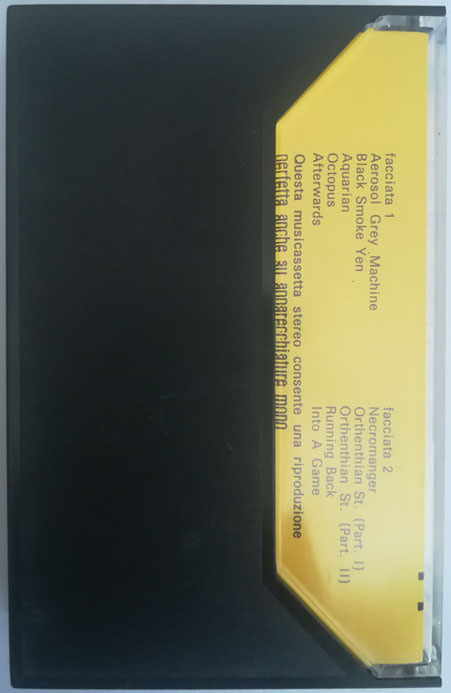
| The Italian cassette tape | ||||||||
| ||||||||
|
||||||||
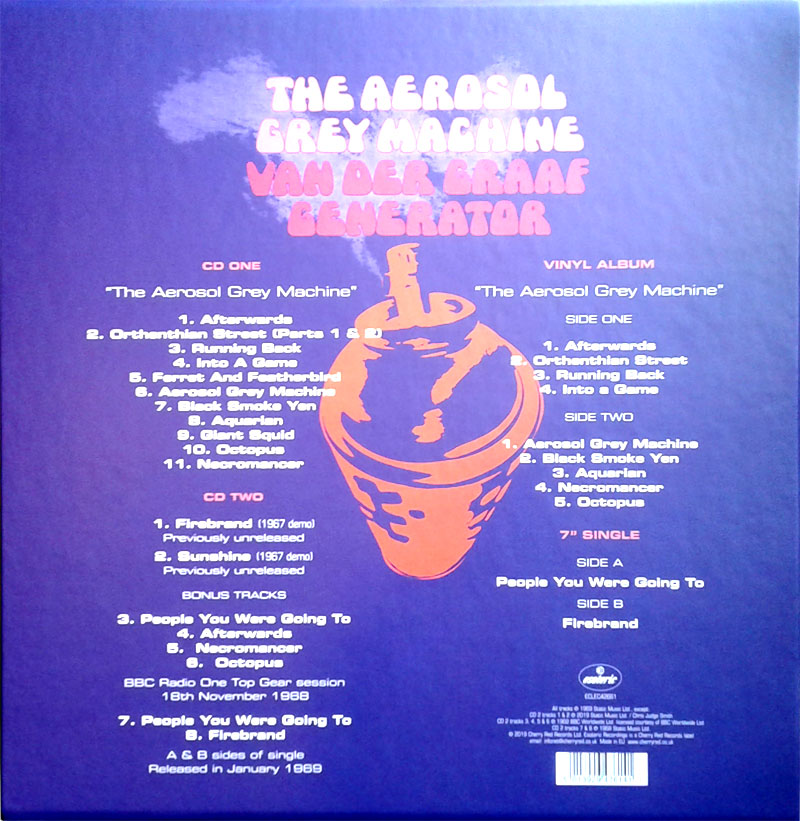
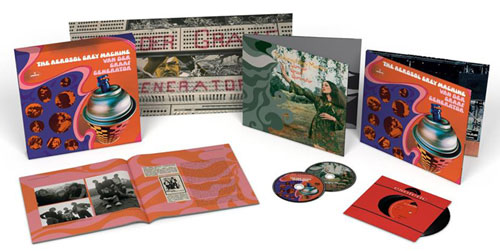
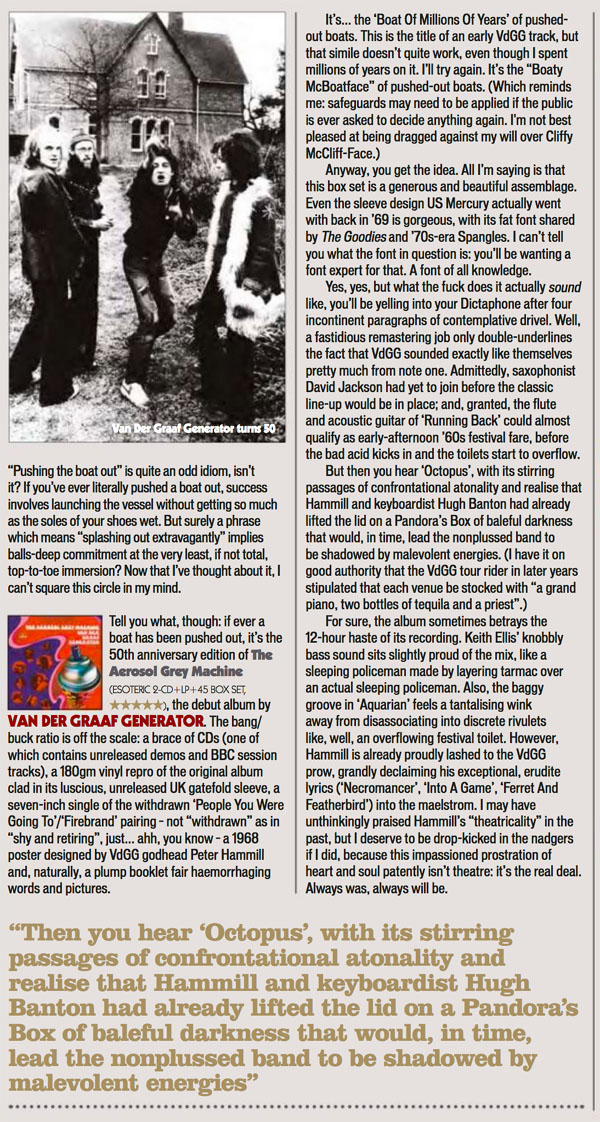
| A boxed set was released on 26th April 2019 | ||||||||
 |
||||||||
| Review in Shindig magazine | ||||||||
 |
||||||||
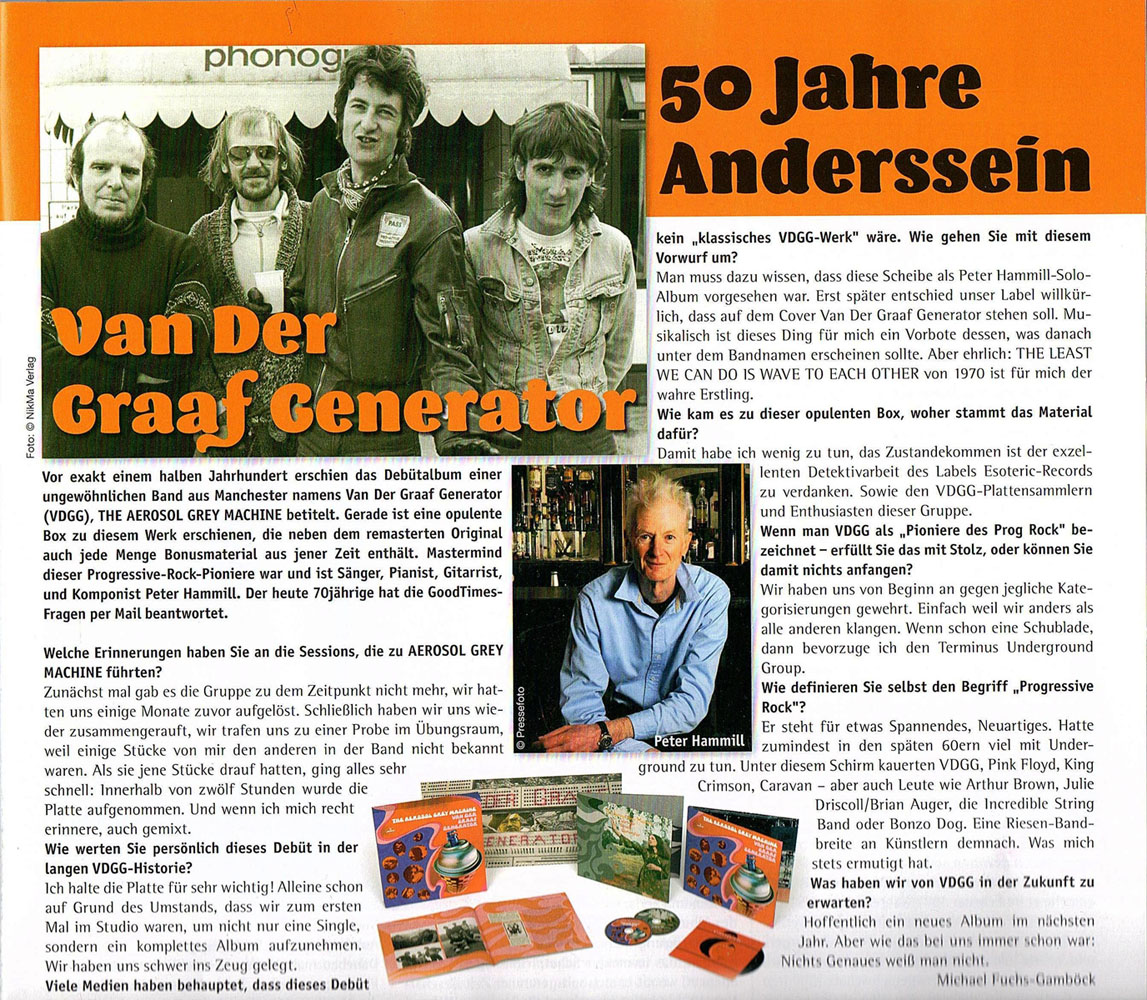
| Review in Good Times magazine (in German)
50 years of being different Exactly half a century ago, the debut album of an unusual band from Manchester named Van Der Graaf Generator (VDGG), entitled THE AEROSOL GREY MACHINE, was released. An opulent box has just been released for this work, which contains not only the remastered original but also a lot of bonus material from that time. Mastermind of these progressive rock pioneers was and is singer, pianist, guitarist, and composer Peter Hammill. The 70-year-old answered the GoodTimes questions by e-mail. What memories do you have of the sessions that led to AEROSOL GREY MACHINE? At first, the group did not exist at the time, we had disbanded a few months earlier. Finally, we got together again, we met for a rehearsal in the rehearsal room because some of my pieces were unknown to the others in the band. When they had those pieces on it, everything went very fast: within twelve hours, the record was recorded. And if I remember correctly, mixed too. How do you personally evaluate this debut in the long VDGG history? I think the record is very important! Alone due to the fact that we were in the studio for the first time to record not just a single, but a complete album. We have a hard time. Many media have claimed that this debut is not a "classic VDGG work." How do you deal with this accusation? You have to know that this disc was intended as a Peter Hammill solo album. Only later did our label arbitrarily decide that the cover should contain Van Der Graaf Generator. Musically, this thing is for me a harbinger of what should then appear under the band name. But honestly: THE LEAST WE CAN DO IS WAVE TO EACH OTHER from 1970 is the true first for me. How did this opulent box come from, where did the material come from? I had little to do with it, the conclusion is due to the excelent detective work of the label Esoteric Records as well as the VDGG record collectors and enthusiasts of this group. If you label VDGG as "Pioneers of Prog Rock" - is that a source of pride, or can you do nothing? We resisted any kind of categorization from the beginning. Simply because we sounded different than everyone else. If there is a pigeon hole, I prefer the term Underground Group. How do you define the term "Progressive Rock" yourself? It stands for something exciting, new. At least in the late 60s had a lot to do with Underground. Under this umbrella were huddled VDGG, Pink Floyd, King Crimson, Caravan - but also people like Arthur Brown, Julie Driscoll / Brian Auger, the lncredible String Band or Bonzo Dog. A huge band of artists. Which always encouraged me. What can we expect from VDGG in the future? Hopefully a new album next year. But as it has always been with us: nothing definite is known. 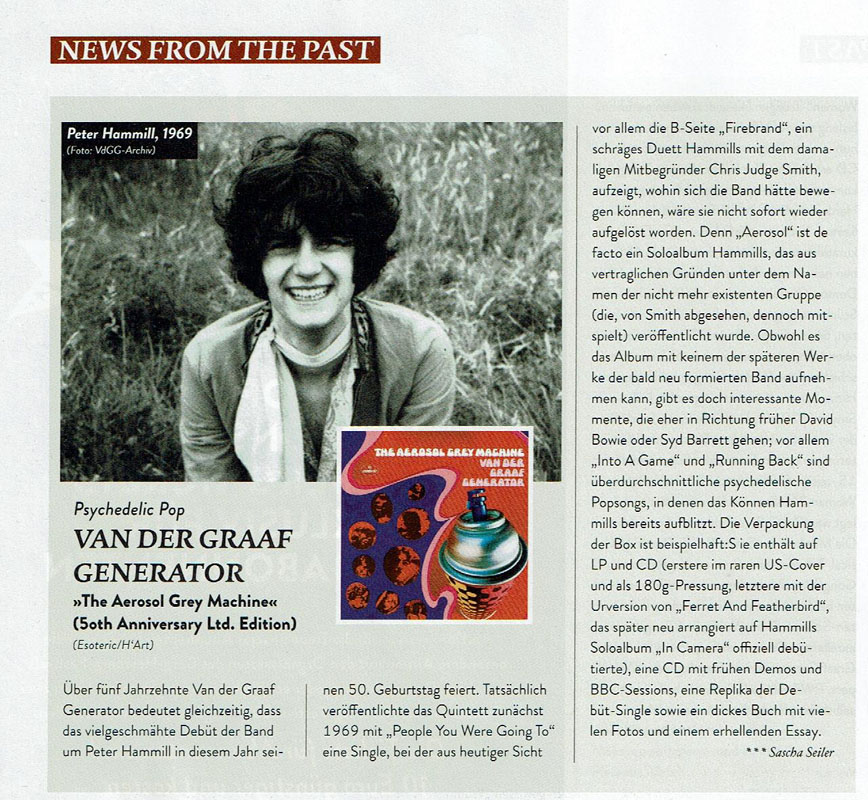 Review in Eclipsed magazine (in German)
|
Psychedelic pop
Over five decades Van der Graaf Generator also means that the much-vaunted debut of Peter Hammill's band is celebrating its 50th anniversary this year. In fact, the quintet first published in 1969 with "People You Were Going To" a single, in which, from today's point of view, especially the B-side "Firebrand", a weird duet Hammill with the then co-founder Chris Judge Smith, points out where the band could have moved, it would not have been resolved immediately. Because "Aerosol" is in fact a solo album of Hammills, which was published for contractual reasons under the name of the defunct group (which, apart from Smith, nonetheless co-plays)., Although the album with none of the later works of the soon to be new there are interesting moments that are more in the direction of former David Bowie or Syd Barrett, especially "Into A Game" and "Running Back" are above-average psychedelic pop songs in which the skills of Hammill already flashing the box is exemplary: it contains on LP and CD (the former in the rare US cover and as a 180g pressing, the latter with the original version of "Ferret And Featherbird", later rearranged on Hammill's solo album "In Camera" officially debuted), one CD with early demos and BBC sessions, a replica of the debut single and a thick book with many photos and an illuminating essay. *** Sascha Seiler | |||||||